Travel
Full Belly, Happy Heart
Originally published on Tumblr ·
I came across a poster for a Peruvian restaurant today and I had absolutely no desire to eat there. I immediately dismissed it as some ersatz version of the real thing. I’m sure in a few months I’ll want to check it out. But only for the food. The experience of eating, the moment I’m missing can’t really be recreated.
On my trip, my friend taught me a common phrase that she had picked up from her stay in neighboring Ecuador—“panza llena, corazón contento”–loosely translated to full belly, happy heart. I couldn’t agree more and couldn’t have come up with a more fitting way to encapsulate my epicurean experience in Peru. From street food to fine-dining restaurants, Peruvians are all about tasty food and I’m glad we have that in common. Food is paramount. I literally plan my day around it.
On our last night in Peru we planned to cap our trip with a visit to the trendy restaurant, Chicha. Chicha is the brainchild of Gastón Acurio, who is an internationally-acclaimed Peruvian chef and the unofficial ambassador of Peruvian food. I read an extensive description of his contribution to the export of national cuisine at the Museo Historico Regional de Cusco.
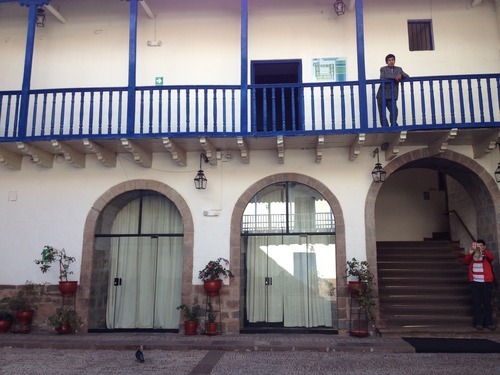
Museo Historico Regional de Cusco (Cusco Regional History Museum) interior courtyard. (No photos allowed in the exhibit rooms).
He was named “Entrepreneur of the Year” in 2005, but his culinary adventures began much earlier; in 1994 he opened Astrid & Gastón with his wife, whom he met at culinary school in France, and it is ranked among San Pellegrino’s 50 best restaurants in the world. Today he owns several restaurants, is involved in key culinary projects, and is the main supporter of the Pachacutec School of Cuisine, that provides culinary education to underprivileged children. Chicha is his only venture in Cusco city, and it is dedicated to reanimating and promoting regional cuisine with local ingredients. There’s a section on the menu for Cuscan fare, so I ordered the adobo de cerdofrom this subset and it did not disappoint.
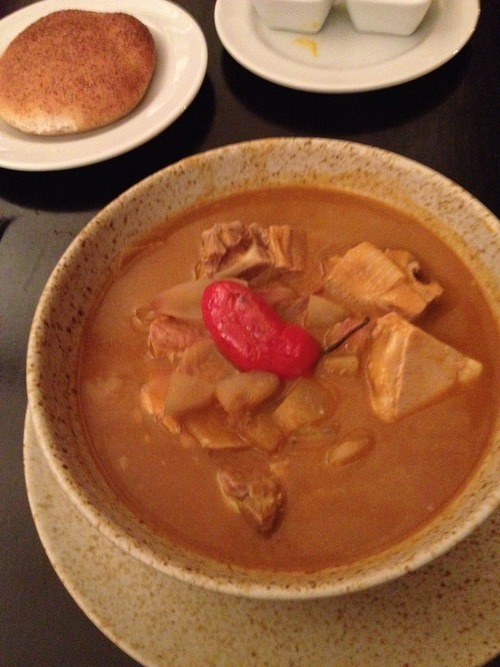
Adobo de Cerdo
While it originated in the city of Arequipa, various regions now prepare Adobo uniquely across Peru. The dish is basically a stew, with cubes of pork and some token vegetables, that has simmered overnight. The result is a rich, sumptuous liquid. I picked away at the whole chili in my bowl to release its potent seeds and liquid to introduce the spice I always crave. The rich herb and spice mixture, including rue, cumin, oregano, aji panca (a pepper), cloves and bay leaf, provided much needed heat as we prepared to walk about in the wintry nighttime temperatures.
My friend’s order of chicharrones de cerdo made me envious. In my experience, chicharrones have only been pork rinds, but Peruvians don’t typically use the rinds in this dish. These chicharrones are pieces of pork that have been boiled until no liquid remains, leaving them to fry in their own fat, thus yielding a perfectly caramelized exterior with tender meat inside. I could eat an entire plate myself, anytime, anywhere! We waited to order these at a nicer restaurant and Chicha proved to be the perfect place.
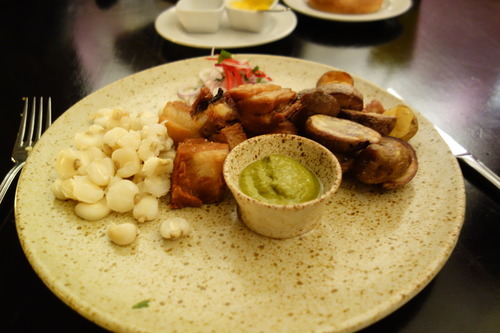
Chicharrones de cerdo served with mote (cooked corn kernels) and hierbabuena (mint-like herb sauce)
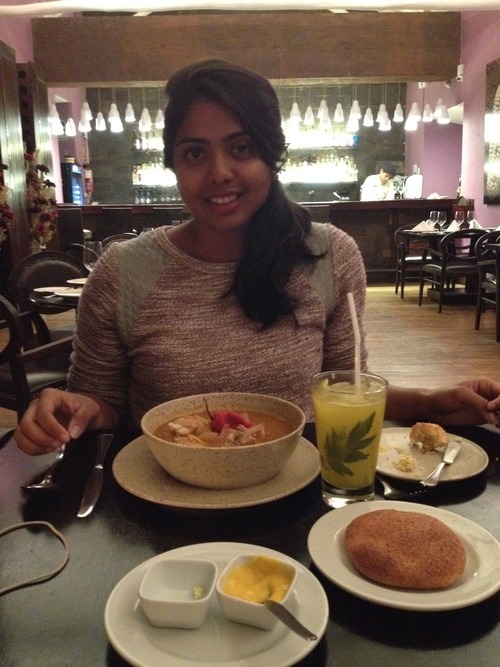
Me with my adobo, served with Peruvian bread.
The eatery is relatively upscale. We called to make a reservation and were told no tables would be available until 10:30 pm, but when we decided to show up at 7:30 pm we were seated in a mostly empty dining room. The elegant space is located upstairs, overlooking Plaza Regocijo, and the operative color is mauve. The walls reminded me of chicha morada—a sweet non-alcoholic drink made with purple corn. It’s on the menu along with other libations made with various alcohols and chicha, which is a name for any fermented or non-fermented beverage made from grains and fruits, but most commonly maize. Chicha de jora is a corn beer that is a key ingredient in the Adobo dish. Maize and all its forms are an essential part of Peruvian cuisine.
I thought I knew corn’s every iteration. Sweet yellow corn, white corn, corn on the cob, bhutta (Indian style roasted corn on the cob), corn starch, corn tortillas, corn in ice kacang (a Malaysian shaved ice dessert), high fructose corn syrup, ethanol, the list goes on! Andean cuisine, however, includes over 55 types of corn, and I had the opportunity to sample a few. Peruvian/Cuzco corn, is the default variety and it features Godzilla-sized kernels of a pale yellow color. Their dense, pasty texture and bland flavor weren’t so appealing to me; I was a bit shocked when I was first introduced to it, but quickly realized that it’s everywhere. After one of our hikes we picked up choclo con queso from a street vendor; it’s steamed corn with a slice of cheese served in the husk. It sounds more exciting than it tastes, yet everyone raves about it–“have you tried choclo con queso??”
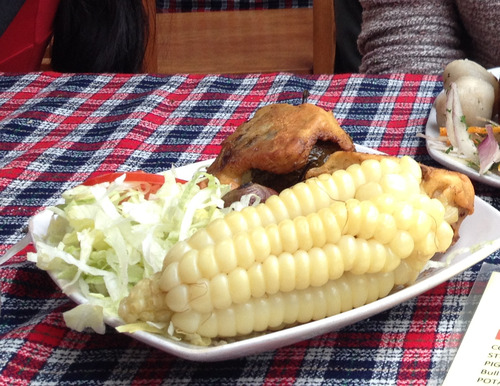
Peruvian choclo
When the corn kernels are boiled with a special, alkali, seasoning it’s basically hominy and isa common side dish–mote (see chicharrones dish above). My tastebuds still unimpressed, I was about to give up on Peruvian corn when I tried cancha salada. It’s a different variety of corn that is fried and salted. The crunchy kernels make a great light snack and are often referred to as the equivalent of popcorn, which makes you wonder if Peruvians have ever had real popcorn. Habas or broad beans are treated the same way and are another common, nutritive snack. They’re served on airplanes like peanuts and they’re a tasty treat for the tired traveler.
Purple corn was something I had never tried until I had a dessert at our rest stop in Ollantaytambo. I forget our cook’s name, but he introduced us to the most delicious Peruvian ingredients and dishes and it was the closest we came to eating at someone’s home. Unfortunately that’s probably also why I only have one picture. Most of my favorite meals were had there. I eat all the time, but I rarely savor. There, wearing what felt like every layer I packed (our guide was wearing his North Face bubble jacket—popular in Peru), the three of us alone in that rest stop in the heart of the cold Sacred Valley, we savored. The cook brought each course out to us as we sat on a rugged wooden table, with benches and chairs, dressed up with a simple woven tablecloth. It was quiet except for the occasional outside sound—train, animals, our voices, and those of the ballad singers on the radio. The lyrics in a mix of Spanish and Quechua were set to varied tempos and were almost always about love. Their voices, often bellowing and rising to high volumes, seemed to warm up the enclosure—“woah, this song is dramatic!” I remember saying.
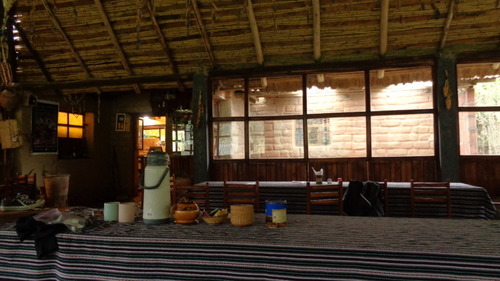
The rest stop.
I enjoyed the soups the most. And it wasn’t just the frigid air that made me want more of it. He would make some of the tastiest soups I’ve had, using common ingredients like pumpkin, quinoa, semolina. I think I might also have a thing for soups—my mom’s roasted red pepper and tomato soup is one of the many she’s perfected and I end up having a few when I visit home. Apparently soups can be found at Peruvian tables year-round, and not just in the winter. There’s even a restaurant in Cusco called Mr. Soup dedicated to the elaborate soup tradition. I walked to it twice when I was back in the city, but it was closed on both occasions. I picked up a recipe book just for Peruvian soups at the airport in Lima, but ran out of cash having spent my last few soles and dollars on food and CDs for my dad. Peruvian soup is a pending item on my list of foods to explore.
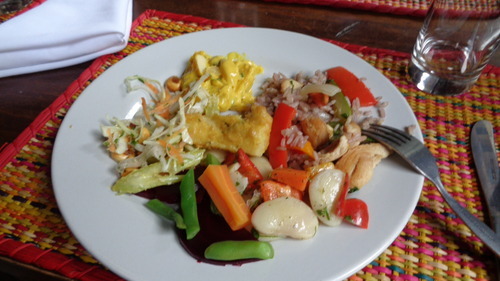
Sopas aside, he introduced us to some quintessentially Peruvian dishes and ways of eating. Peruvian bread—flat, round and sturdy, is a common breakfast item. We usually had it with eggs. Meals are sometimes served with a plate of raw, boiled or steamed vegetables like broccoli, cauliflower, beets and carrots. We also tried trucha, or trout, lightly seared and served with a lime wedge. In the interior of the country, trout is a more reliable fish and since we were nowhere coastal we avoided Ceviche, another famous Peruvian export.
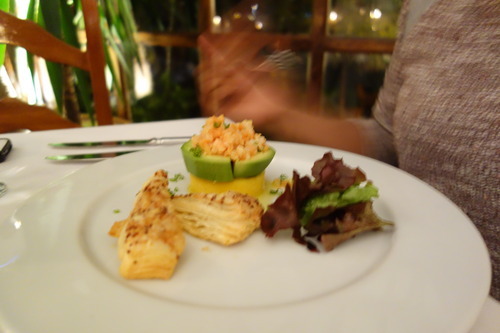
Trout tartare on avocado and polenta cake, from our amazing dinner at the fabulous Inkaterra resort in Aguas Calientes.
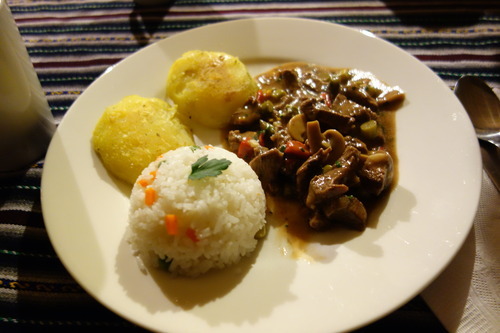
Our cook’s variation of lomo saltado.
Lomo saltado is to Peruvian food what chicken tikka masala might be to North Indian cuisine outside of the subcontinent or what spaghetti bolognese is to Italian-American food. It’s a bit of mutt. A syncretism. And when it comes to food, that’s a beautiful thing. Soy, ginger, vinegar and rice—Asian ingredients—come together with sirloin or rib-eye strips, French fries, spices, onions, peppers and tomatoes as a stir fry. It started out as a Chifa dish that has become mainstream. Peruvian-Chinese food is called Chifa. (My friend and I were talking about how Chinese cuisine, is so much more globalized than Indian cuisine. To be fair there is one Indian restaurant, Govinda, in Cusco. I know this, because almost every time I approached someone for directions they would ask me if I was looking for Govinda. Offering up their opinion—“so spicy!”—before I could say a word.) We cleaned off an addicting plate of Chifa fried rice at El Centro after a long day of shopping. Lomo saltado, like most Peruvian dishes, is served with potatoes and rice. The carbohydrate serving rivals American portion sizes and comes close to the amount of rice that Indians traditionally eat. However, most Valley residents walk everywhere and the high altitude means you burn more calories than you would elsewhere (I still managed to gain weight on the trip).
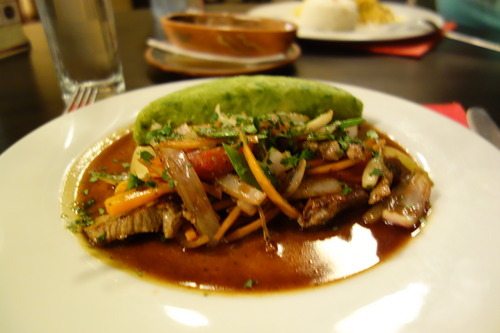
Lomo de Alpaca– lomo saltado made with alpaca meat, at Q'anela Restaurant in Urubamba.
My sweet tooth was glad that our cook prepared delicious desserts to end our meals. The purple corn pudding dusted with cinnamon, mazamorra morada (purple pudding), was gelatinous and overly saccharine for my taste. It’s essentially reduced purple corn, sugar and water, strained with some prunes and apricots. I ate every last bite of the other two desserts we had—dulce de leche (reduced, sweetened condensed milk) and chocolate pudding. The chocolate pudding was the best chocolate pudding I have ever had. For a die-hard chocolate lover, this is a bold statement, but I’m prepared to stand by it. The consistency was not too stiff and still had one or two lumps, so it was clearly fresh. It was chocolate-y, but had the right mix of other ingredients, making it light and addictive. Like everything else at the rest stop, we ate every last bite and managed just enough restraint not to ask for seconds.
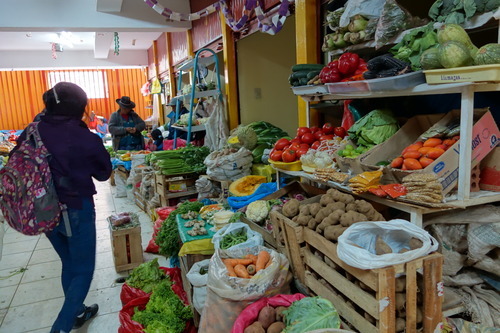
The meals there were farm-to-table at its finest, or at least the closest I have come to such an experience in a while. Sure, I eat at plenty of farm-to-table restaurants and I grew up eating almost exclusively fresh food, but mostly from markets and groceries. But I was lucky to have tasted some Peruvian ingredients in their homeland. Quinoa, pumpkin, corn, the meats and most other ingredients in our meals were likely to have been sourced a stone’s throw away from our camp. While quinoa is easily recognized as a Peruvian export found in the U.S., a little research shows that the country’s farms produce many other common items found in the U.S. For example, the asparagus I’ve been buying for years mostly comes from Peru–its the largest exporter of the vegetable. Its farming was allegedly encouraged instead of the planting of coca, used in cocaine production. Agriculture is key to the culture and economy; the sector accounts for 6.2% of national GDP, as opposed to 1.2% in the U.S.
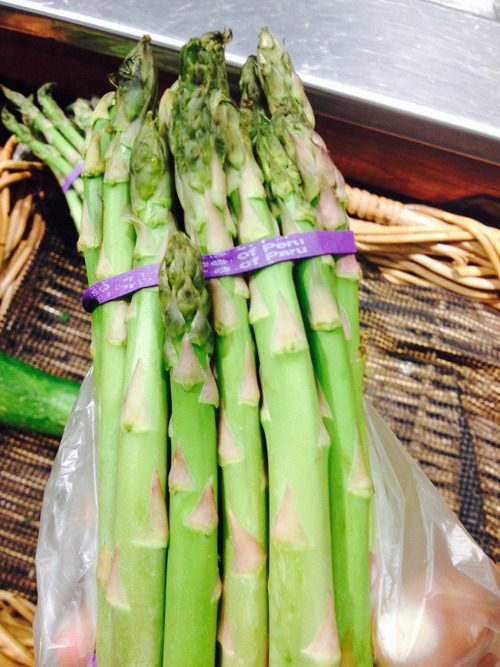
Picked up a bunch of asparagus at my local grocery store in Atlanta
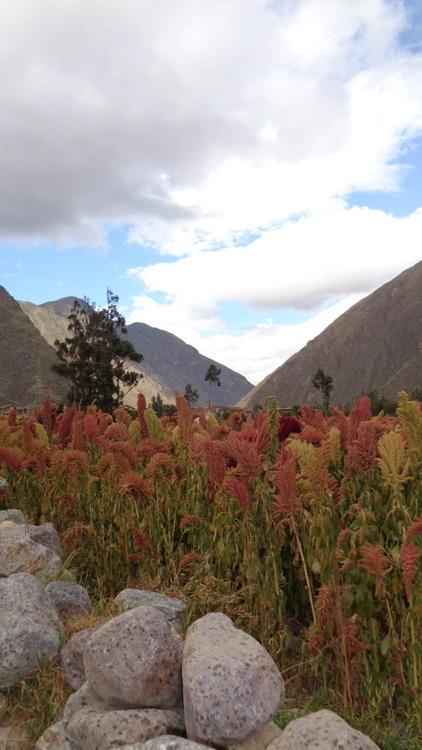
Quinoa in the Sacred Valley (steps away from our rest stop)
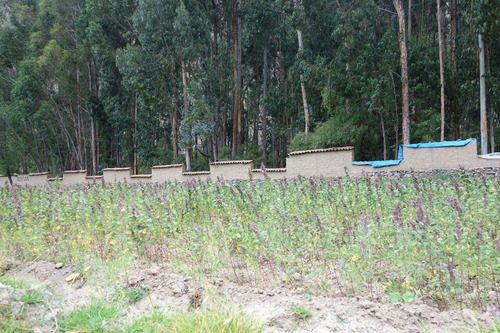
More quinoa in the Sacred Valley (steps away from our rest stop)
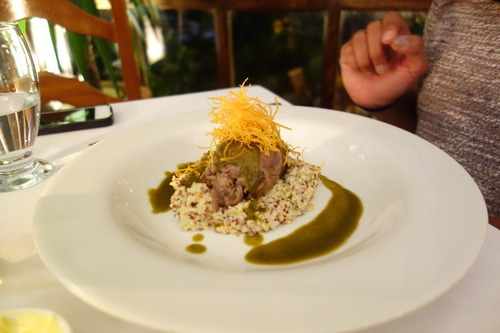
Lamb served on a bed of quinotto–my new favorite way to eat quinoa. It’s a twist on risotto and its creamy, yet lighter than risotto, which makes it so addictive. I could easily eat a bowl a day. I’ve cooked risotto and farotto, and quinotto is now on the list!
What amazed me was that as we traveled across altitudes and climates in the Sacred Valley, the diversity and abundance of harvest remained. From our rest stop in Ollantaytambo, at 2,792 meters above sea level, we traveled 40 minutes by train to Aguas Calientes, 2,040 meters above sea level, to a more tropical climate with different flora and fauna. Here, we hiked to Mandor to see waterfalls and a botanical garden, and on our way we passed avocados, banana and coffee plantations. Watching a man on the side of the train tracks climb an avocado tree reminded me of the coconut tree in my grandfather’s lush garden—a man wearing little and without any harness would climb up the slanted tree with a curved blade and deliver the tender coconuts to us, down below. The lush forest habitat around Aguas Calientes, near Machu Picchu, is inviting for plants and animals that are unique to this area and differs greatly from higher, more arid environments where cacti, for example, grow effortlessly.
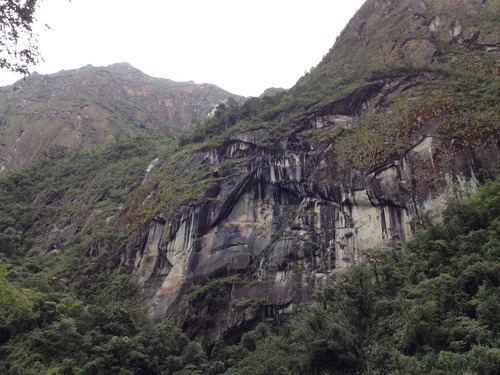
En route to Mandor
Peru’s sophisticated farming practices date back to pre-Inca civilizations. The Inca culture and belief system was inextricably tied to land and agricultural events. We visited an Inca lab of sorts at the archaeological site of Moray on an excursion from Cusco. It takes about an hour and a half by bus to reach the town of Maras, where Moray is located, from Cusco, and towards the end the ride becomes bumpy and dusty. The confusing combination of the blazing sun and the cooler temperatures, the rocky ride and the steady drone of our purportedly bi-lingual guide, Juan Carlos, made this a rather enervating journey. Even his jokes (which were only made in Spanish) weren’t enough to breathe life into this wearied traveler. For a small sum of seven soles, we were granted entry into the site that is located across from the famous peak, Chicon, which rises up to 5,530 meters above sea level. The ruins themselves are at the bottom of a steep hill; the short climb is taxing, thanks to the rarefied air and blazing sun. I can’t imagine what it would be like in the summer. Juan Carlos advised us not to fall down for fear of damaging the 600-year old ruins.
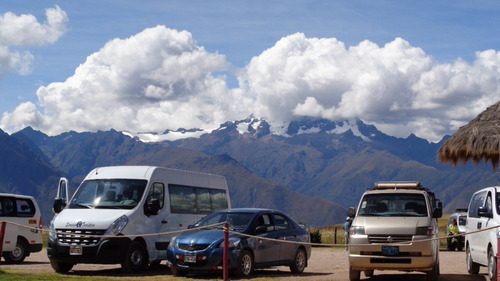
Cloud-covered Chicon
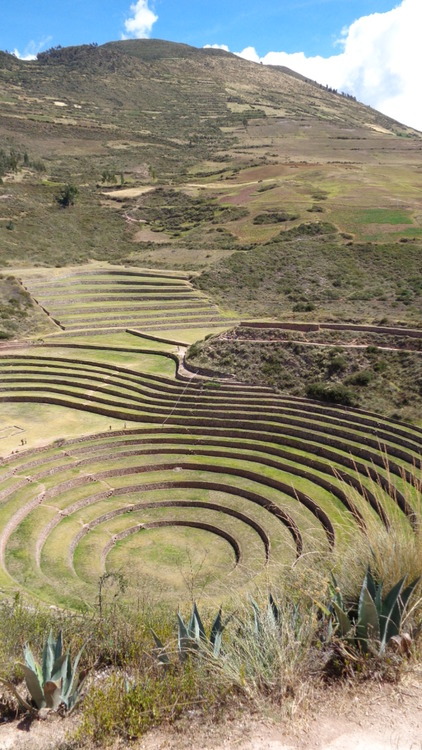
The view from the top of the hill
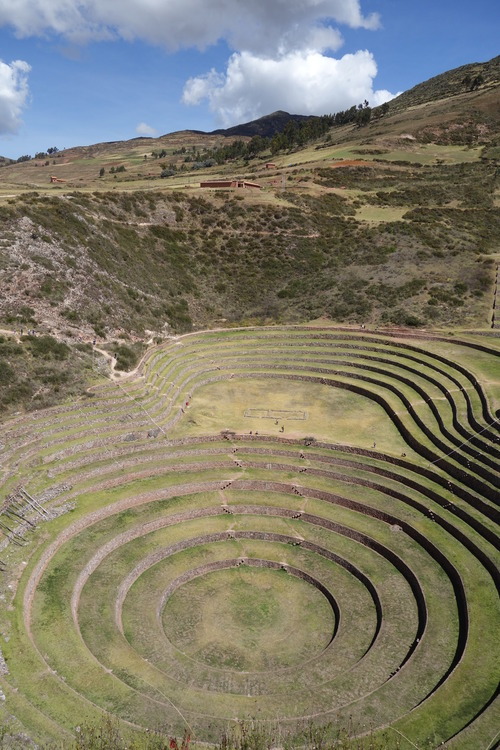
Another view from the top
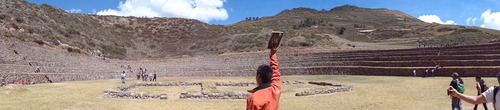
Trusty Juan Carlos leads the way
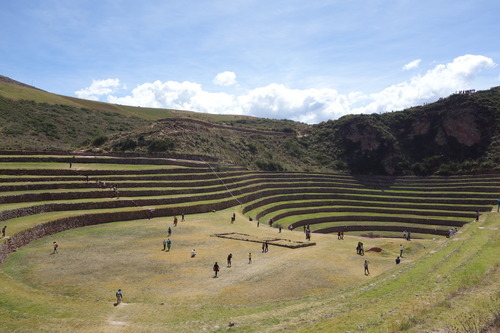
Down at the site
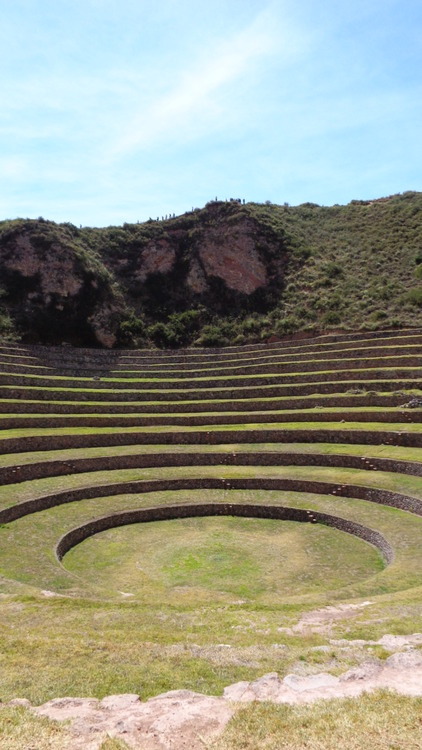
As close as you can get to the heart of the Inca lab
The terraces in concentric rings vary in temperature by up to 15 degrees Celsius (59 Farenheit) between the topmost and lowermost. This enabled the development of numerous micro-climates, similar to modern day greenhouse technology. The rock at the bottom of this natural depression is said to be porous to allow for water drainage, or perhaps underground aqueducts were built. Due to this confluence of natural gifts, the site became a testing ground for vegetables, grains and herbs used across the continent. Among them, thousands of potato varieties and hundreds of maize types. By analyzing the soil and dating pollen samples, scientists were able to uncover the fascinating use for this site, but more work remains and is at risk due to the site’s precarious condition. How the Incas understood and harnessed this geological formation is mind-boggling, as is almost everything else about their civilization. Not all questions about this site have been answered and like so many others it remains an enigma.
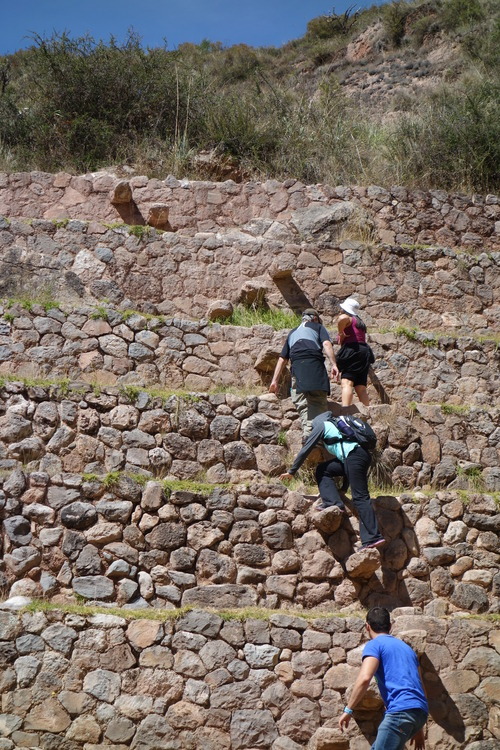
Making our way on Inca stairs at the terraces before we climb back up to the top of the hill!
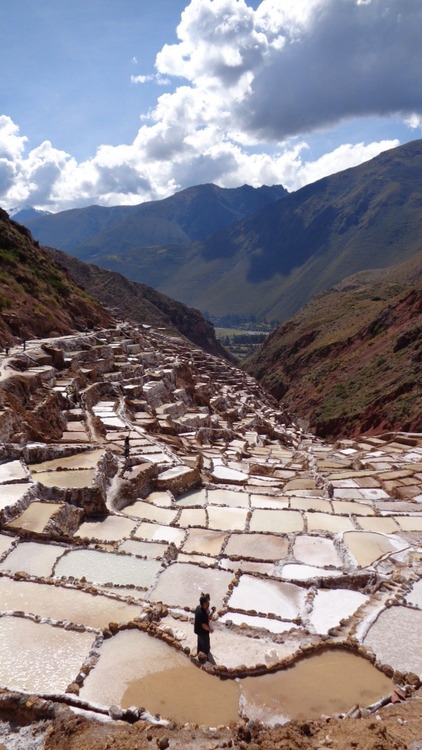
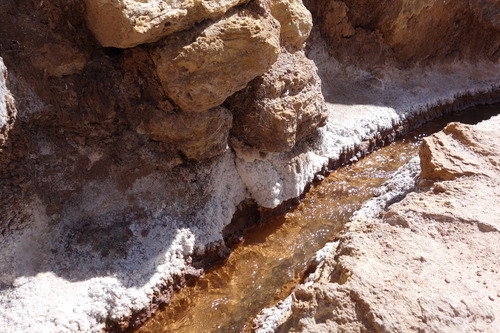
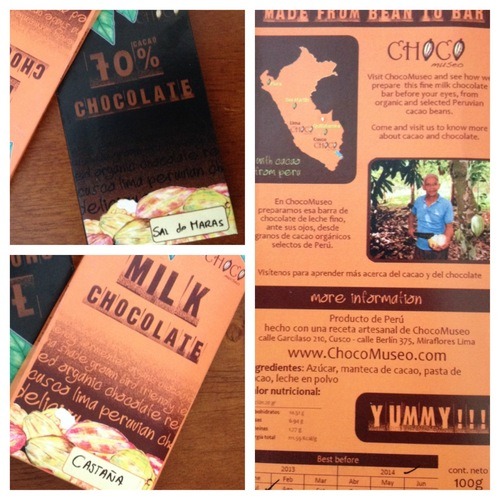
A short drive from Moray but still in the town of Maras, is the site of spectacular salt flats. To be honest, I’ve never given much thought to the origins of this most basic and ubiquitous of seasonings, but I know salt mines take various forms across the world. The Salar de Uyuni in Bolivia is the world’s largest salt flat and at the top of my travel bucket list! At the Maras Salineras, solar evaporation of the hundreds of shallow pools of salty water from a nearby underground stream makes salt. This salt harvest pre-dates the Incas by hundreds of years and is maintained by the local community—families manage plots that are assigned based on size and length of time spent in the community. I picked up a few packets of salt, some for my friend’s growing salt collection; pink salt, herb salt (mixed with garlic, huacatay, aji and other herbs) and rock salt are a few varieties sold at the shops next door. Apparently the salts, lauded for their quality and health benefits, can be expensive when exported, and are popular in many foreign countries.
Toto’s house
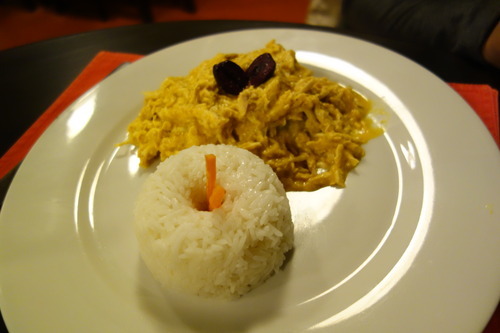
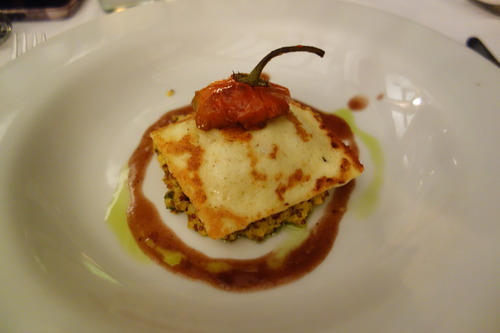
Real spicy food, however doesn’t feature. For a girl who was raised on real red and green chilies, chili powder, chili padi and as a Sriracha aficionado, the Peruvian rocoto doesn’t really pack a punch. Delicious in their own right, some local delicacies.
brazil nuts
salsa de ahi
sopas
drink a lot of soda